CHI Researchers Advance National Angelman Syndrome Study, Delivering Real Impact for Children and Families
Researchers at Children’s Health Ireland have reached a major milestone in the ASTRAL Project, a national study designed to improve care and prepare for future treatments for children and young people with Angelman Syndrome.
25 Bealtaine 2026
CHI at Crumlin, CHI at Connolly (by appointment), CHI at Tallaght, CHI at Temple Street
News
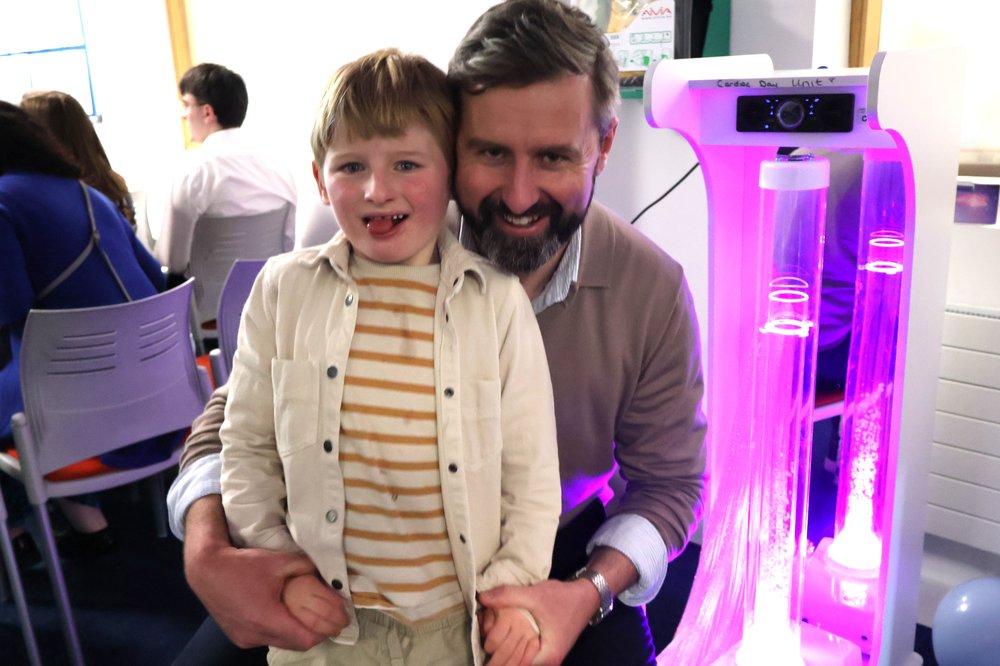
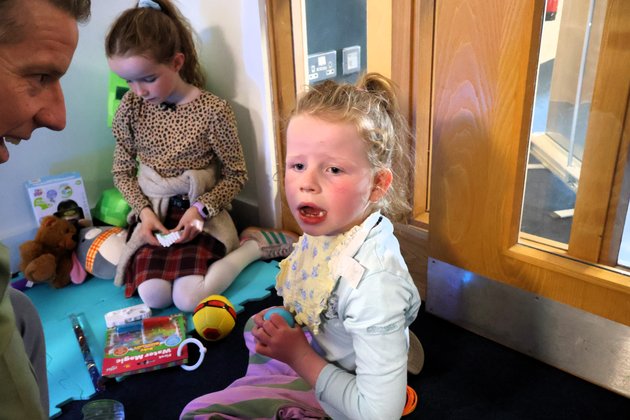
Tomás McLoughlin with his dad at the event
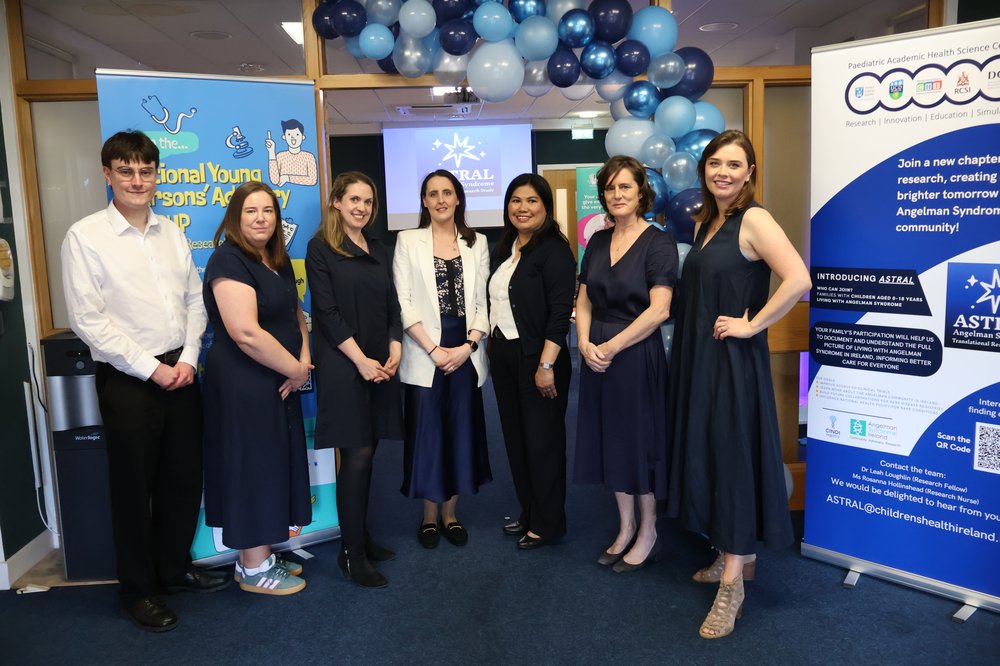
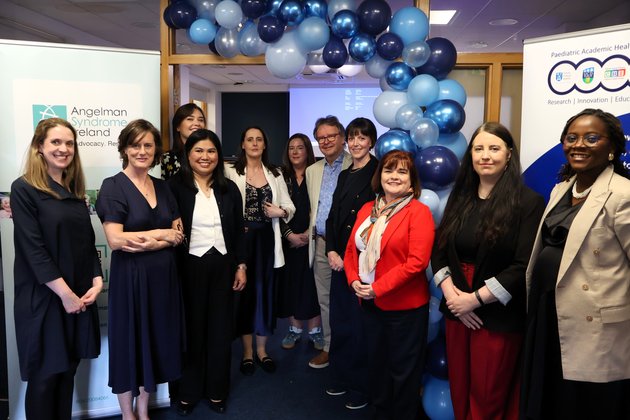
Members of the research team from left to right: Fergal Dolan, Denise Fahy, Dr Aedin Collins, Dr Helena Scully, Rosanna Hollinshead, Dr Jacqueline McBrien, Dr Leah Loughlin
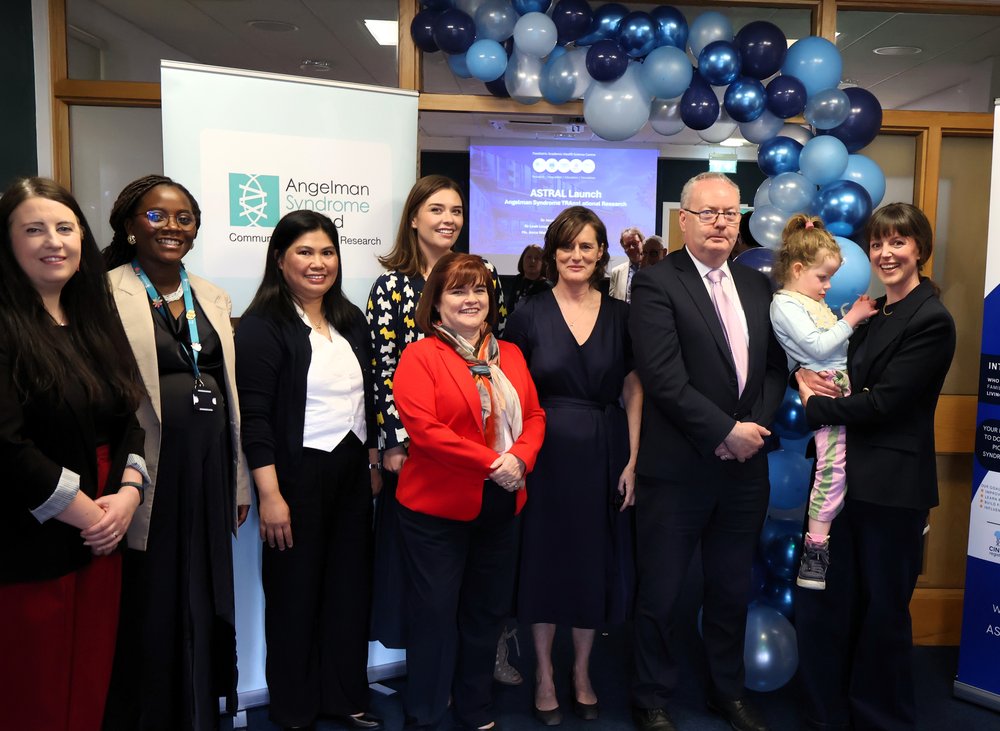
Michael Moynihan TD, Minister for Education with Special Interest in Special education and inclusion and CEO of CHI Lucy Nugent
This rare neurogenetic condition affects development, mobility, sleep, and overall quality of life, requiring specialist, multidisciplinary care.
“The opening of the ASTRAL project is a moment of real hope for the Angelman a Syndrome community. We believe this work has the potential to make a genuine and lasting difference in our community, improving understanding, care, and outcomes for those living with Angelman Syndrome. We would like to express our sincere gratitude to everyone who helped bring this project to life — the researchers, clinicians, community partners, funders, and patient advocate whose dedication and collaboration made it possible. It is through this shared effort that meaningful change happens, and we are proud to stand alongside all those involved as this important work begins.”
The ASTRAL Project has already achieved significant breakthroughs. The team completed a national retrospective review, developed Ireland’s first dedicated Angelman Syndrome database, and worked closely with clinicians and families to ensure the study reflects real-world needs and priorities. Led by Dr Jacqueline Mc Brien, with Dr Aedin Collins and Research Fellow Dr Leah Loughlin, the project has been supported at every stage by the CHI Clinical Research Centre (CRC), with key contributions from Helena Scully (Project Manager), Rosanna Hollinshead (Research Nurse), and Denise Fahy (Data Project Manager). The CRC has played a central role in coordinating the study, managing data, guiding ethics submissions, and supporting stakeholder engagement, ensuring the research is both robust and impactful.
Through analysis of 58 children attending CHI between 2007 and 2025, the study has highlighted key trends, including delayed diagnosis, high healthcare use, and inconsistent phenotypic documentation. Delphi consultations with clinicians and family representatives helped define core variables for the database, capturing not only medical outcomes but also social care needs and quality-of-life measures. These insights are shaping the first comprehensive national understanding of Angelman Syndrome in Ireland, providing a foundation for future research and care planning.
“The ASTRAL study creates a national research database for children and families living with Angelman syndrome in Ireland. Rare diseases and diseases associated with intellectual disability and medical co-morbidities are often under-researched. We aim to study the full experience for the Angelman syndrome community in Ireland looking at not just the medical and health outcomes but also the educational and social landscape, including participation. Our study will complement the international research in AS. The database also aims to prepare Ireland for the emergence of advanced therapies for this neuro-genetic condition.”
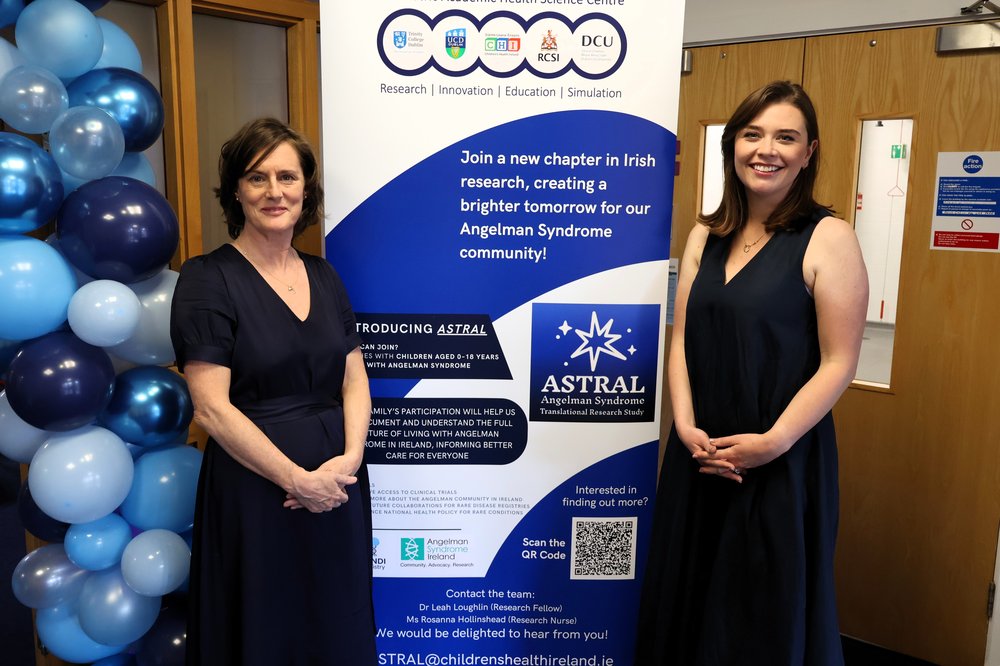
Dr Jacqueline McBrien and Dr Leah Loughlin
The ASTRAL Project has already gained international recognition, with findings presented at conferences including the Foundation of Angelman Syndrome Therapeutics (FAST) in the U.S. and the Paediatric Neurodisability Hot Topic and Collaboration Day in Ireland. Upcoming presentations at the European Academy Childhood-Onset Disability (EACD) Annual Conference will further highlight the study’s impact and Ireland’s leadership in rare disease research, including abstract acceptance for publication in The DMCN Developmental Medicine and Child Neurology Journal (Impact Factor 4.3)
Looking ahead, the ASTRAL database will serve as a critical tool for health service planning, aligning Irish care pathways with international standards and supporting readiness for emerging gene-targeted therapies. Thanks to the CRC’s coordination and expertise, the project is ensuring that high-quality research translates into real-world benefits, improving outcomes and everyday life for children with Angelman Syndrome and their families across Ireland.
This project was funded by an anonymous donor through our Children's Health Foundation.