New Burns Information Hub provides parents and carers with advice on burn prevention, first aid and support for children and young people
Children’s Health Ireland urges families to put safety first this Halloween as firework injuries can have life-changing consequences
30 Deireadh Fómhair 2026
Children’s Health Ireland (CHI) is urging parents, carers and children across Ireland to prioritise safety this Halloween, warning that fireworks, bonfires, open flames and unsafe costumes can cause serious burns and devastating injuries. While Halloween is an exciting time for children and families, the risks associated with fireworks and fire-related activities can have lasting consequences.
The warning follows research published in the Irish Medical Journal in March 2026, which examined firework-related injuries treated at the national paediatric burns unit during Halloween week in 2024. Ten referrals were made over seven days, with three children requiring hospital admission. Injuries included hand fractures, burns and an eye injury that resulted in permanent vision loss. These findings highlight the serious risks fireworks pose to children and the importance of prevention.
To help families better understand burns and how to prevent them, CHI is directing parents and carers to its new Burns Information Hub, available on the Children’s Health Ireland website. The hub provides accessible information about burn prevention and first aid, understanding burn injuries, treatment, recovery and support for children and their families. Families can visit the hub at: Burns Information Hub - Children's Health Ireland
“It’s important that children get to enjoy the excitement of dressing up, trick-or-treating and spending time with family and friends at Halloween. However, we see fireworks and open flames causing serious injuries that may affect a child for the rest of their life. “Firework injuries are not always minor burns. They can involve significant damage to the hands, face and eyes, sometimes requiring surgery and prolonged treatment. We strongly encourage families to keep children away from fireworks and bonfires and to choose safer ways to celebrate. Prevention is always better than treatment. We also encourage parents and carers to visit the new CHI Burns Information Hub, where they can find practical advice on preventing burns and what to do if an injury occurs.”
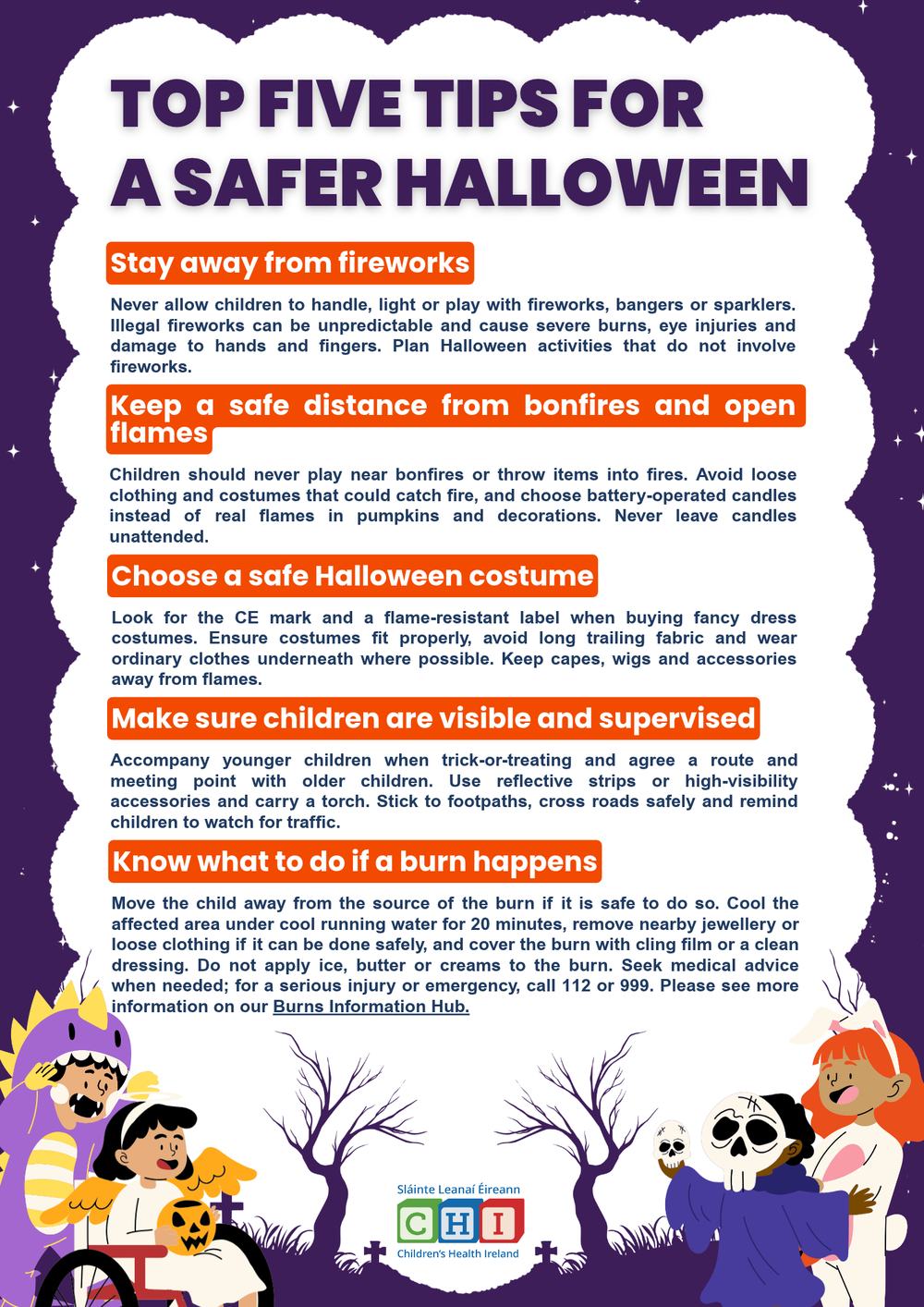
Children’s Health Ireland’s top five tips for a safer Halloween
1. Stay away from fireworks
Never allow children to handle, light or play with fireworks, bangers or sparklers. Illegal fireworks can be unpredictable and cause severe burns, eye injuries and damage to hands and fingers. Plan Halloween activities that do not involve fireworks.
2. Keep a safe distance from bonfires and open flames
Children should never play near bonfires or throw items into fires. Avoid loose clothing and costumes that could catch fire, and choose battery-operated candles instead of real flames in pumpkins and decorations. Never leave candles unattended
3. Choose a safe Halloween costume
Look for the CE mark and a flame-resistant label when buying fancy dress costumes. Ensure costumes fit properly, avoid long trailing fabric and wear ordinary clothes underneath where possible. Keep capes, wigs and accessories away from flames.
4. Make sure children are visible and supervised
Accompany younger children when trick-or-treating and agree a route and meeting point with older children. Use reflective strips or high-visibility accessories and carry a torch. Stick to footpaths, cross roads safely and remind children to watch for traffic.
5. Know what to do if a burn happens
Move the child away from the source of the burn if it is safe to do so. Cool the affected area under cool running water for 20 minutes, remove nearby jewellery or loose clothing if it can be done safely, and cover the burn with cling film or a clean dressing. Do not apply ice, butter or creams to the burn. Seek medical advice when needed; for a serious injury or emergency, call 112 or 999.