Rehearsing for Reality: An Inside Look at our Simulation Programme
Rehearsing for Reality: An Inside Look at our Simulation Programme
Sept. 23, 2026
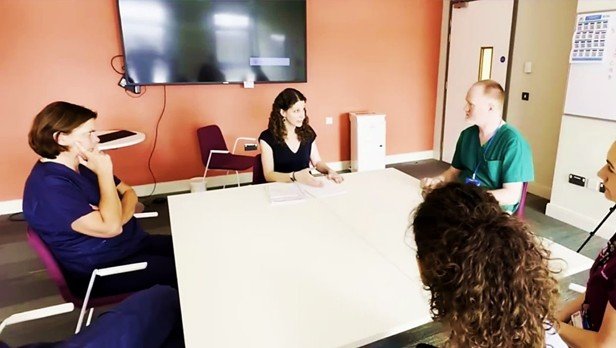
Consider a team in CHI at Crumlin, Temple Street, Tallaght or Connolly rehearsing the management of a child in cardiac arrest. Consider, too, testing the management of cardiac arrest in the new hospital, identifying an issue that could otherwise have cost critical seconds during a real resuscitation. This is the day-to-day work of the ICHI Simulation Programme, and over the course of 2026 it has become one of the most significant tools available to CHI.
The Simulation Programme operates across three interconnected areas:
- Translational simulation which tests and improves the systems and teams around us
- Simulation-based education which develops the skills and teamwork of staff in CHI
- Faculty development which builds the capacity to deliver simulations in CHI

Preparing for the new hospital
The most visible aspect of this work in 2026 has been translational simulation, testing processes in the new hospital to ensure care can be delivered to critically sick or injured children, as well as refining existing processes in our current hospitals.
What has this included?
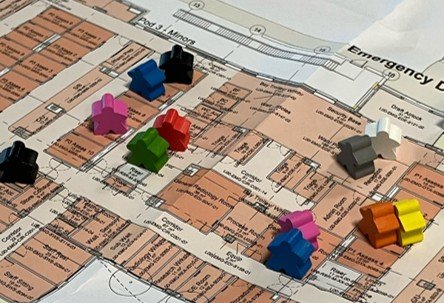
- Clinical readiness simulation tabletop simulations
- Visually enhanced mental simulations (VEMS) for the Emergency Department, IPATS, outpatient areas, hydrotherapy pool, MRI, paediatric, GI and cardiology inpatient wards and endoscopy theatre, involving approximately 150 participants.
These sessions guide teams through scenarios step by step, surfacing questions of layout, equipment, communication and workflow well in advance of live implementation.
Alongside this, the team has conducted systems improvement simulations in high-stakes areas in our existing hospitals, including:
- Readiness for the Tallaght Emergency Care Unit network switch (scheduled from midnight Thursday 24th September to 08:00am Tuesday 29th September.
- Intrahospital transfers of critically sick children and emergency resuscitation processes, providing a controlled environment in which teams can test and refine processes until they work effectively
Translational simulation is not a time-limited project tied to a single milestone. Beyond our move, it will become a permanent strategic capability within CHI, one that strengthens teams through collaborative problem solving and interdisciplinary collaboration, while supporting patient safety and service redesign through the ongoing testing, evaluation and optimisation of clinical systems, processes and environments. This reflects a broader shift toward proactively testing systems in advance, rather than relying solely on retrospective learning.
Developing skills where care is delivered
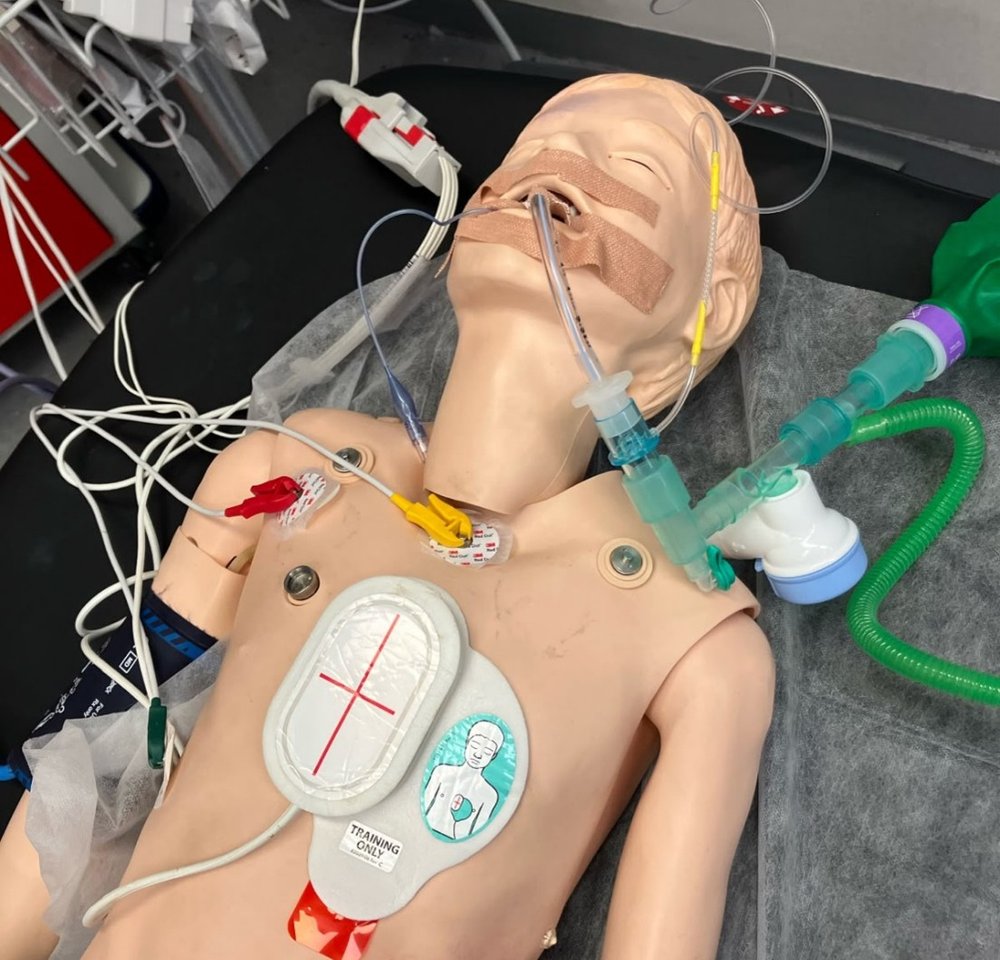
Simulation-based education focuses on developing the people and teams who operate within them. This is the element of the programme our staff are likely to encounter directly: team training and skills development delivered across every CHI site, spanning from emergency and intensive care through to neonatal and ward settings.
There is an emphasis on interdisciplinary learning, bringing together staff from different professions and departments. Simulation-based education extends beyond individual clinical skills to address communication, teamwork and crisis resource management which are capabilities central to how a team performs under pressure.
Across CHI, hundreds of simulations are run each year in theatre, PICU, emergency department and inpatient wards. This year, our simulation-based education has extended beyond physical health emergencies to include mental health emergencies. The new CYP APEx course using actors to portray adolescents presenting with psychiatric and psychosocial emergencies has received phenomenal feedback and provided invaluable teachings to our teams.
Building capacity for the future
In 2027, ICHI Sim will launch a structured faculty development programme spanning both translational simulation and simulation-based education, incorporating train-the-trainer partnerships and international collaborations with our academic partners. The intention is to establish a growing community of practice and to position CHI as a national centre for simulation faculty development, increasing local and national capacity for simulation-based education and systems improvement.
Looking to the future
Over the remainder of 2026, ICHI Sim will focus on:
- Continued readiness exercises and systems improvement simulations in preparation for the move to the new hospital
- Further simulation-based education programmes covering both physical and mental health emergencies across our hospital sites
- Early preparatory work for the 2027 faculty development programme, including educational courses and training
Simulation is increasingly becoming embedded within how CHI prepares, learns and improves, and its role across the organisation is expected to continue to grow. It is an invaluable resource for CHI as we prepare to move into the National Children’s Hospital Ireland.